By private appointment only. No hourly arrangements. Introductions are structured as discreet extended engagements (dinner til morning minimum) by personal concierge.
—The Register
A small, considered, selection for the discerning gentleman





















— British Social Season client
Highly discreet billing
By private appointment
50+ Global destinations
Verified companions
Dedicated concierge
Absolute discretion
The British social season runs from May through September, organised around a calendar of events that has been refined over generations into one of the most socially coded and historically rooted annual programmes in the world. Royal Ascot, Henley Royal Regatta, the Goodwood Festival of Speed, the Goodwood Revival, Chelsea Flower Show, Cowes Week, Burghley Horse Trials, the Epsom Derby: each event draws a concentrated gathering of wealth, influence, and social standing within a context where the conventions of attendance are as carefully observed as the events themselves. To move through this calendar as an international client is to navigate an environment where small calibrations of dress, manner, and social register carry significant weight.
Mynt Models has arranged companion introductions for clients attending the British season across more than three decades. The introductions we make for this calendar are among the most context-specific we produce, because each event operates within its own distinct social conventions, and a companion who understands those conventions from within is worth considerably more than one who is simply elegant and well-presented. Elegance is the baseline. What distinguishes the right introduction here is social intelligence of a particular and practised kind. Among our global companion destinations, the British season stands apart as a connected social world rather than a series of separate occasions.
The British Season: A Calendar of Socially Coded Events
The British season is not a formal institution with a governing body. It accumulated over the course of the nineteenth and twentieth centuries through the convergence of aristocratic pastimes, royal patronage, and the rhythms of the English country-house calendar, and it has survived the erosion of most of the social structures that produced it because the events themselves are genuinely excellent. Ascot produces some of the finest flat racing in the world within a setting of architectural grandeur. Henley is the premier rowing regatta in the world and one of the most beautiful sporting events in existence. The Goodwood events together constitute the most significant automotive gathering anywhere. Chelsea is the world’s most prestigious horticultural show. Cowes is the oldest and most celebrated sailing week in the world.
What ties these events together is not their category but their social character. They are attended by broadly the same community of British and international wealth across the summer months, and the social connections formed or maintained across the season represent a significant part of the calendar’s actual value. A client who attends three or four of these events across a summer is not attending them in isolation. He is moving through a social world that reconvenes at each venue, where faces are recognised and relationships deepened across the months. A companion who moves with him through this world needs to understand that she is not attending a series of separate occasions but a single extended social programme with different settings and different dress conventions at each stage.
Royal Ascot and the Epsom Derby: The Flat Racing Calendar
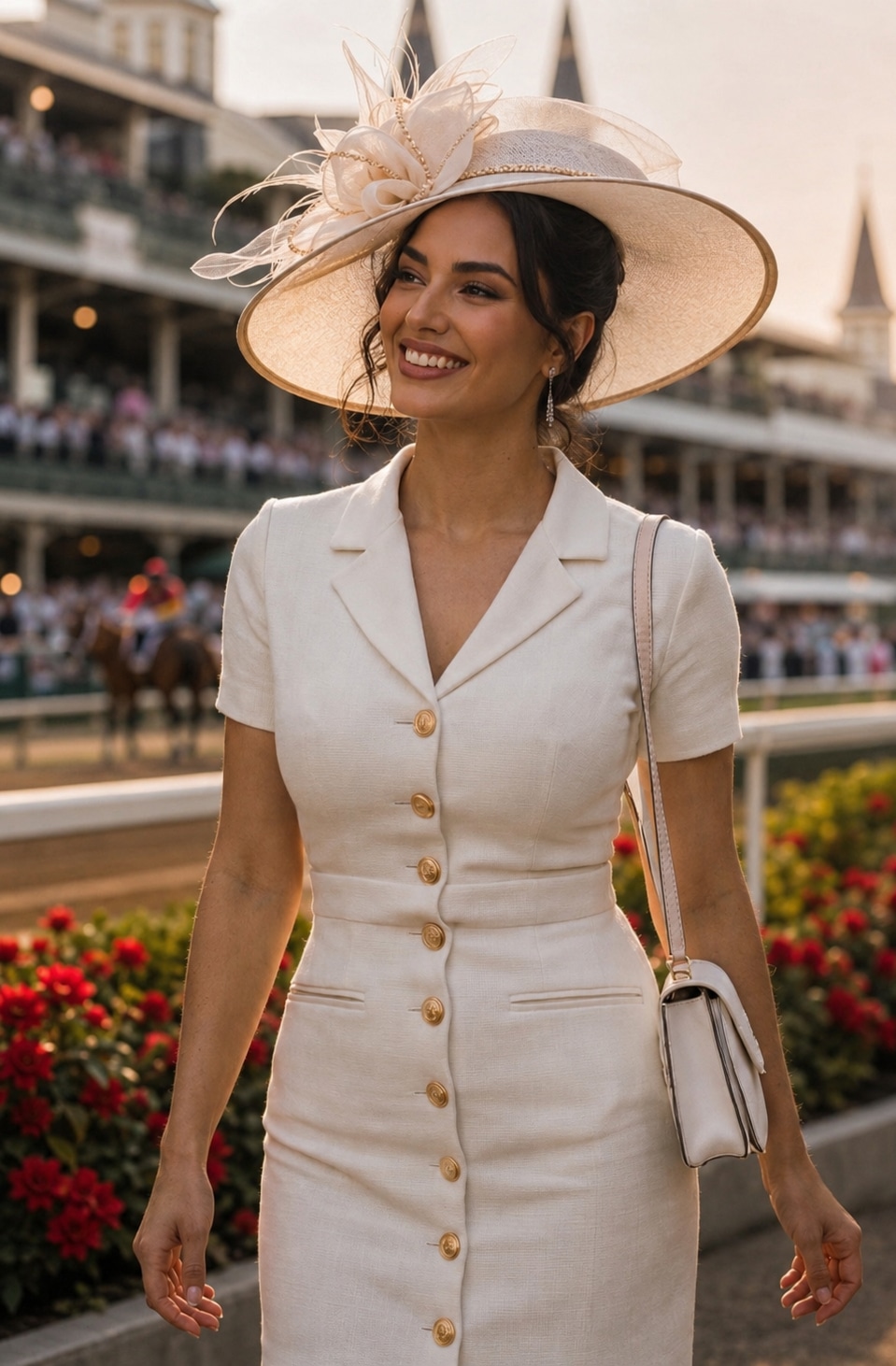
Royal Ascot is the most formally structured event in the British social calendar. The Royal Enclosure, to which admission is by application and the approval of its committee, operates within a dress code that has been specific and enforced for well over a century. Morning dress for gentlemen. For women, formal day dress with a hat of sufficient structure: the Enclosure’s hat requirement is not decorative guidance but a condition of entry.
The social register of the Enclosure itself is exactly what one would expect from an event created by and for the Court: composed, assured, and deeply aware of who is present and on what basis. The five days of racing in June are genuinely the finest flat racing calendar in Britain, which means the event’s official programme provides a coherent framework for a day that reads naturally whether or not one is primarily there for the social activity.
The Epsom Derby in early June is a different proposition entirely. Britain’s most historically significant flat race is run across the Downs south of London within an environment that is simultaneously grand and genuinely popular. The grandstands at Epsom lack the architectural self-consciousness of Ascot, and the crowd on Derby day spans social registers in a way that the Royal Enclosure does not. For a client who wants the historical weight of the Classic without the formality of Ascot, Epsom provides an occasion with its own distinct character: the racing is exceptional and the Downs setting, on a clear June day, is among the finest in British sport.
Henley Royal Regatta: The Thames and the Stewards' Enclosure
Henley Royal Regatta takes place across the first week of July on a straight mile of the Thames at Henley-on-Thames in Oxfordshire. The regatta is the most important rowing event in the world, and its social architecture is organised around a contrast that defines the English upper-class social occasion more precisely than any other.
On the general riverside banks, anyone with admission can watch the racing from a few metres away. In the Stewards’ Enclosure, accessible by invitation from a current member only, the dress code is as specific as Ascot’s and the social character is immediately legible as a particular and very English kind of confidence: the ease of people who have been coming here for decades, in some cases across generations.
Inside the Stewards’ Enclosure, the atmosphere is organised around the racing, the picnic lunches at the riverside tables, and the late afternoons that extend naturally into the surrounding town and its gardens. The Leander Club, whose pink clubhouse sits at the Henley end of the course, adds another layer of distinction for clients whose membership or connection opens that particular door.
A companion introduced for Henley needs to be entirely comfortable in this world without performing comfort, which is the social distinction that matters most in these spaces. The English upper class has a well-developed ability to identify social ease that is not genuine, and a companion who reads the room correctly provides a quality that no surface-level elegance can substitute for.
Chelsea Flower Show and the Spring Season
The Chelsea Flower Show, held at the grounds of the Royal Hospital in May, is the Royal Horticultural Society’s annual centrepiece and the most attended horticultural event in the world. The private view days in the week preceding public opening are the social event within the event: attended by RHS members, trade professionals, and invited guests, they provide the Show’s extraordinary content within a setting that is quieter, less crowded, and more genuinely engaged with the gardens themselves. A companion introduced for Chelsea’s private days needs genuine visual and aesthetic sensitivity and the capacity for sustained attention to craft, design, and horticultural knowledge. The conversations run toward planting, landscape, architecture, and the fine applied arts, and the environment is exceptionally beautiful in a way that distinguishes genuine from performed appreciation immediately.
Chelsea opens the outdoor season in a setting that is simultaneously formal and garden-party in character: the RHS tent structures and show gardens create a particular spatial world that is unlike any other occasion in the calendar. Dress is smart occasion wear rather than the enforced formality of Ascot, and the social register, though high, is somewhat more relaxed in its expression. The show closes on a Saturday and is followed the same weekend by the first weekend of Royal Ascot the following month, which means the late-May and June period constitutes the most concentrated run of events in the entire season.
Goodwood: The Festival of Speed and the Revival
The Goodwood estate in West Sussex hosts two events of quite different character across the summer. The Festival of Speed in late June or early July is the largest and most socially significant automotive gathering in the world: four days on the Duke of Richmond’s private estate grounds in which Formula One teams, major collectors, racing legends, and motor industry principals occupy a hierarchy of enclosures and manufacturer hospitality spaces that operates in parallel with the official hillclimb programme. The social architecture of the Festival, the way in which the real activity concentrates in the manufacturer enclosures and the private dinners dispersed across the Chichester plain each evening, is described fully on our Goodwood Festival of Speed page.
The Goodwood Revival in September is a distinct event with its own social character and a dress code of quite unusual specificity: period dress is required of all guests, and the Revival community takes this seriously. Attendees arrive in clothing consistent with the 1948 to 1966 period that the Revival celebrates, and the visual effect of ten thousand people in period dress moving through a recreated mid-century paddock environment is unlike anything else in the British calendar. A companion introduced for the Revival needs not only physical ease in period dress but genuine enthusiasm for its aesthetic and the social playfulness it produces. The Revival draws a slightly younger and more creatively oriented crowd than the Festival, and the atmosphere, though still organised around serious motor racing and collecting, has a warmth and theatricality that distinguishes it from the Festival’s more conventional social hierarchy.
Cowes Week and Burghley: Maritime Season and the Autumn Events
Cowes Week on the Isle of Wight in August organises itself around the Solent and the institutions that have governed sailing on these waters since the nineteenth century. The Royal Yacht Squadron, whose castle sits on the Cowes waterfront and whose membership is among the most exclusive in the world, is the social centre of the week. The Squadron’s nightly prizegiving and the gatherings on the private yachts moored along the waterfront define the rhythm of Cowes in a way that has changed little across the past century. The sailing aristocracy who attend are a specific and identifiable community: internationally connected, physically active, and thoroughly accustomed to the particular and equalising social environment of a boat, where formal hierarchies tend to dissolve in the face of practical seamanship.
Burghley Horse Trials in early September takes place across the parkland of Burghley House in Lincolnshire, one of the finest Elizabethan houses in England, within a landscape designed by Capability Brown. The eventing world that gathers here is competitive, internationally attended, and deeply rooted in the country-sports culture of British landowning families. The cross-country day, when the world’s best event horses tackle the park’s famous course with the house as backdrop, draws a crowd that combines the serious equestrian community with a broader country-house social gathering. A companion introduced for Burghley needs to be physically comfortable across a long outdoor day and socially at ease in an environment where formality is minimal but the social coding is thoroughly present.
The Social Intelligence the British Season Requires
The specific challenge of the British season for an international client is the depth of the social coding that underlies each event. The events are not difficult to attend at a surface level: the right ticket, appropriate dress, and a basic awareness of the programme provide sufficient navigation. But the social texture of these occasions, the specific way in which the British upper-professional and aristocratic classes relate to one another across a summer of shared events, is something that takes years of attendance to absorb from the outside.
A companion who has moved through these environments genuinely, who understands the distinction between Ascot’s Royal Enclosure and its Silver Ring, between the Stewards’ Enclosure and the general Henley riverside, between a formal Cowes Week dinner at the Royal Yacht Squadron and an evening gathering on a private yacht at anchor in the Solent, brings to the arrangement an immediate orientation that a client navigating the season for the first or second time cannot otherwise access. The companions we present for the British season are selected for exactly this quality: educated, socially formed within or deeply familiar with these environments, and able to read the room at each venue with the accuracy that genuine experience produces rather than the approximation that briefing alone can provide.
Planning Ahead: Logistics and Lead Times
London serves as the natural base for Royal Ascot, Chelsea, the Epsom Derby, and Henley. Goodwood, Cowes, and Burghley require either a country-house base in the relevant area or day travel from the capital. The hotels of Mayfair, Belgravia, and Knightsbridge that serve this client profile at the required level, Claridge’s, The Connaught, The Dorchester, book substantially during peak season weeks and should be confirmed well in advance of the relevant event.
For companion arrangements, Royal Ascot introductions should be confirmed no later than eight weeks before the opening day, and twelve weeks for clients attending across multiple Royal Enclosure days. Henley, Chelsea, and the Goodwood Festival carry similar lead times. Cowes arrangements benefit from at least ten weeks, owing to the island logistics and the specific accommodation pressures of a week in which the Isle of Wight fills with racing crews and yacht owners from across the world.
Clients who attend several events across the season sometimes arrange for an extended single introduction that moves through the calendar rather than separate arrangements for each occasion. This approach produces a qualitatively different result: a companion who has been present across the season has a context that a single-event introduction cannot replicate, and the social dynamic between two people who have already attended three or four events together is of a different and considerably more natural character than a fresh introduction at each venue.
Begin Your British Social Season Introduction
Mynt Models arranges private introductions in British Social Season for discerning gentlemen. If you would like to discuss availability, your preferences, or have questions about how we work, we welcome a confidential conversation.
Answering Questions About
Elite British Social Season Escorts
What distinguishes the social register of the British season from comparable elite events elsewhere in Europe?
The British season’s distinguishing characteristic is the combination of genuine historical continuity and active social function. Events like Royal Ascot and Henley are not recreations or heritage performances; they are current social institutions attended by people whose families have been coming for generations alongside new wealth that has earned its place in the Enclosure. This layering produces a social environment in which the codes of behaviour are simultaneously very old and very live. The equivalent environments in continental Europe, Monaco’s Grand Prix hospitality circuit, the Cannes Film Festival, the Davos social calendar, are organised around newer or more purely professional hierarchies. The British season operates within a social grammar that is older, more opaque to outsiders, and considerably more rewarding to navigate correctly.
Does a companion need specific knowledge of racing, rowing, or sailing to function well at these events?
Specialist technical knowledge is not a prerequisite, but genuine curiosity and the capacity to follow and contribute to conversations in which she is not the domain expert are essential. The communities that attend Ascot, Henley, and Cowes have spent significant parts of their lives engaged with their respective activities, and conversation at these events reflects that depth. A companion who asks intelligent questions, who listens with evident interest rather than polite tolerance, and who remembers what she has heard across the course of a day will function significantly better than one whose social ease does not extend to sustained engagement with unfamiliar subjects. We screen for this quality directly in the companions we present for the British season.
Which event in the British season requires the most careful preparation for a companion introduction?
Royal Ascot demands the most careful preparation across the most dimensions simultaneously. The dress code in the Royal Enclosure is enforced at the gate and is specific in ways that require advance thought: hat requirements, colour conventions that are not formally stated but socially legible, footwear appropriate to a day that involves considerable standing on grass. Beyond dress, the social architecture of the Enclosure, with its combination of long-standing members and newer guests, requires a social composure that is neither over-eager nor inappropriately casual. The Goodwood Revival requires preparation of an entirely different kind: the period dress requirement means that clothing must be sourced and fitted in advance, and the playful but committed character of the Revival community means that arriving in half-hearted period costume reads as disengaged. Our briefing process for each event is calibrated to its specific demands.
Can a companion access the most restricted areas at these events, such as the Royal Enclosure or the Stewards’ Enclosure?
Access to the Royal Enclosure at Ascot requires a valid badge, which clients who hold Enclosure access receive in a fixed number. A companion accompanying a badged client moves through all areas accessible to that badge without issue. The Stewards’ Enclosure at Henley is accessible by member invitation; a companion accompanying a member-invited client enters on the same basis as any other guest of the member. Manufacturer hospitality enclosures at Goodwood are controlled by the relevant brand, and access depends on the client’s relationship with the inviting organisation. Our role is to ensure that the companion understands the access situation at each venue in advance and is prepared for the specific environment she will be entering, not to arrange credential access that depends on the client’s existing relationships and invitations.
How does Mynt Models handle arrangements where a client is attending with professional associates who should not be aware of the introduction?
This is a common scenario across the British season and one we handle with complete discretion. At an event like Ascot or Henley, a companion is introduced simply as a personal guest, which requires no explanation in a social environment where people routinely bring guests whose relationship to the host is not formally characterised. The introduction is entirely natural. Our consultation process establishes which associates will be present, in which settings, and for how long, so the companion understands the social geography of the arrangement before she arrives. She will not require managing in the moment. All arrangements are handled outside any record that could become visible to professional contacts, and the briefing we provide gives her the context to navigate any professional conversation she encounters during the event.
Is it possible to arrange a companion for several events across the British season as a single extended introduction?
Yes, and this is an arrangement a number of our clients prefer for exactly the reasons one might expect. A companion introduced for a single event, however successful the introduction, begins each subsequent occasion from a standing start. A companion who has attended Ascot, Goodwood, and Henley with the same client across a summer arrives at each venue with an established ease and a shared frame of reference that changes the quality of the experience considerably. Extended season arrangements are discussed and structured through the initial consultation, with the companion’s availability across the relevant dates confirmed before any commitment is made. The lead time for a multi-event arrangement is correspondingly longer, typically twelve to sixteen weeks before the first occasion.
What are the practical accommodation logistics for a client attending several events across the season?
London provides a workable base for the majority of the season’s events, with Ascot, Chelsea, and Henley all within an hour of Mayfair by car or rail. For Goodwood, a country-house rental in West Sussex or a room at the Goodwood Hotel on the estate provides considerably better access than travelling from London each day. For Cowes, accommodation on the Isle of Wight is strongly preferable to the ferry commute from Southampton: the social life of Cowes Week begins early in the day at the harbour and extends late into the evening, and the crossing adds friction at both ends. For Burghley, Stamford itself or a nearby country hotel provides the natural base. Our consultation process covers accommodation logistics as part of the planning for any arrangement that involves travel beyond London, and we can advise on properties that have worked well for clients attending these events in previous years.
What is the realistic lead time for a Royal Ascot arrangement, and what happens if a client approaches later?
Eight weeks before the opening of Royal Ascot is our recommended minimum for a single-day arrangement. For clients attending across multiple days of the Royal Enclosure meeting, twelve weeks allows the consultation to be thorough and the companion selection to be unhurried. Clients who approach within three or four weeks of Ascot will find companion availability meaningfully constrained: the women we present at the level that the Royal Enclosure demands have their own professional commitments and international schedules that cannot be reorganised at short notice. The quality of an introduction arranged under time pressure is invariably lower than one planned with adequate lead time. Royal Ascot takes place during the same week each June. The planning horizon is predictable, and acting on it early costs nothing.
How does the Goodwood Revival’s period dress requirement affect companion briefing and preparation?
The Revival is the most logistically specific event in the British season from a wardrobe perspective. The requirement for clothing consistent with the 1948 to 1966 period is taken seriously by the Revival community, and arriving in clothing that reads as contemporary or as a superficial attempt at period dress is immediately noticeable in an environment where many attendees have invested considerably in their wardrobes. Our briefing for Revival arrangements includes specific guidance on sourcing and fitting period-appropriate clothing, whether from dedicated vintage suppliers, costume hire specialists, or high-quality reproduction tailors. A companion who arrives correctly and enthusiastically dressed for the Revival enters an environment where her presentation immediately signals that she understands the occasion. The period dress culture also creates a particular social warmth and playfulness at the Revival that distinguishes it from every other event in the season.
How does Mynt Models select companions specifically for the British season, as distinct from its standard city introductions?
Selection for the British season draws on a specific subset of qualities within our broader portfolio. The most important is genuine familiarity with the social environments in question, whether through personal attendance, through educational and professional formation in British institutions, or through the kind of extensive experience in similar environments that produces equivalent social fluency. Beyond this, we look for genuine interest in the activities at the centre of each event, whether that is racing, rowing, sailing, horticulture, or automotive collecting, because performed interest is immediately legible to audiences who have spent significant parts of their lives in these worlds. Physical ease across long outdoor days, wardrobe range across the season’s varied dress conventions, and the composure to move between the formal and informal registers that a single event day can contain are all qualities we consider explicitly in matching companions to British season arrangements.